


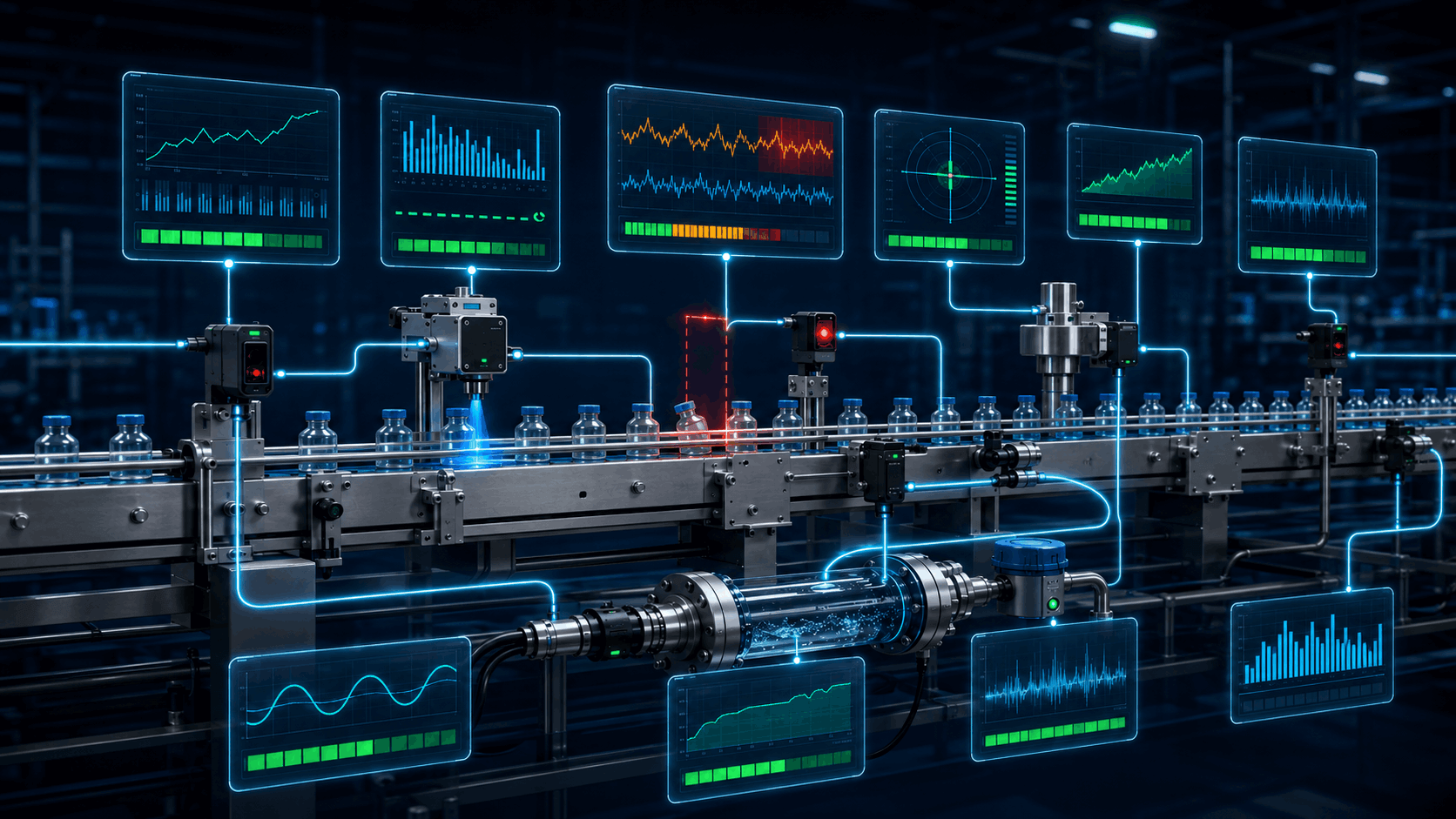
As manufacturing continues to evolve towards more connected and data-driven environments, the focus is shifting from simply automating processes to actively understanding and optimising them in real time.
One of the most impactful areas of this transformation is sensor technology. When combined with IO-Link and connected infrastructure, modern sensors are no longer just detection devices, they become active sources of operational intelligence.
This is particularly valuable in areas such as conveyor systems, production flow monitoring, and early fault detection, where small inefficiencies can quickly escalate into downtime or waste.
Introducing Connected Sensors in IO-Link Environments
Connected sensors form a key part of modern industrial efficiency strategies. When integrated into IO-Link architectures, they provide continuous communication between field devices and control systems.
This allows manufacturers to move beyond simple signal-based sensing and access richer operational data such as:
- Real-time performance feedback
- Diagnostic and health information
- Process condition monitoring
- Early warning signals
Products such as the SICK LUTS/LUTX range and SICK UD18 sensors demonstrate how connected sensing can be applied in practical industrial environments, enabling more intelligent monitoring of production processes.
By turning sensors into data-rich devices, manufacturers gain a clearer understanding of how systems are performing at any given time
Improving Conveyor Efficiency
Conveyor systems are a critical part of many production environments, but they are also a common source of inefficiencies.
Issues such as misalignment, blockages, or inconsistent flow can significantly impact overall productivity if not detected early.
Connected sensing solutions such as the SICK Roller Sensor Bar and SICK DT80 distance sensors provide continuous monitoring of conveyor performance. This helps ensure that movement, spacing, and flow remain consistent.
By improving visibility across conveyor systems, manufacturers can reduce bottlenecks and maintain smoother production flow.
Monitoring Production Flow in Real Time
Understanding how materials move through a production line is essential for maintaining efficiency.
Without real-time monitoring, delays or inconsistencies in flow can go unnoticed until they begin to impact output.
Connected sensors allow manufacturers to:
- Track material movement in real time
- Identify slowdowns or blockages
- Improve line balancing
- Optimise throughput
This level of visibility helps ensure that production systems operate as efficiently as possible, with minimal disruption.
Reducing Waste Through Better Detection
Waste in manufacturing is often the result of small issues that are not detected early enough.
This can include:
- Misfeeds
- Product misalignment
- Incorrect positioning
- Process inconsistencies
By using connected sensors with continuous feedback, these issues can be identified much earlier in the process.
This reduces:
- Material waste
- Rework requirements
- Unnecessary downtime
- Energy inefficiencies
Over time, this contributes to more sustainable and cost-effective operations.
Detecting Issues Before They Escalate
One of the most valuable benefits of connected sensing is early issue detection.
Rather than reacting to failures, manufacturers can identify warning signs such as:
- Changes in signal behaviour
- Variations in process conditions
- Irregular flow patterns
- Sensor degradation trends
When combined with IO-Link connectivity, this data becomes even more actionable, enabling maintenance teams to respond before issues escalate into downtime.
This is where solutions like SICK LUTS/LUTX, UD18 sensors, and advanced monitoring systems play a key role in supporting proactive maintenance strategies.
Building Smarter, More Efficient Operations
Connected sensors are not just about improving individual machines, they are about improving the entire production environment.
By enhancing visibility across conveyors, production flow, and process conditions, manufacturers can make more informed decisions and respond more quickly to changes.
When combined with IO-Link and broader connected infrastructure, these technologies form a foundation for smarter, more efficient operations, where data drives performance, and visibility drives improvement.
Understanding where you stand and what steps to take next can be challenging, but you don’t have to navigate it alone, get in touch today.