


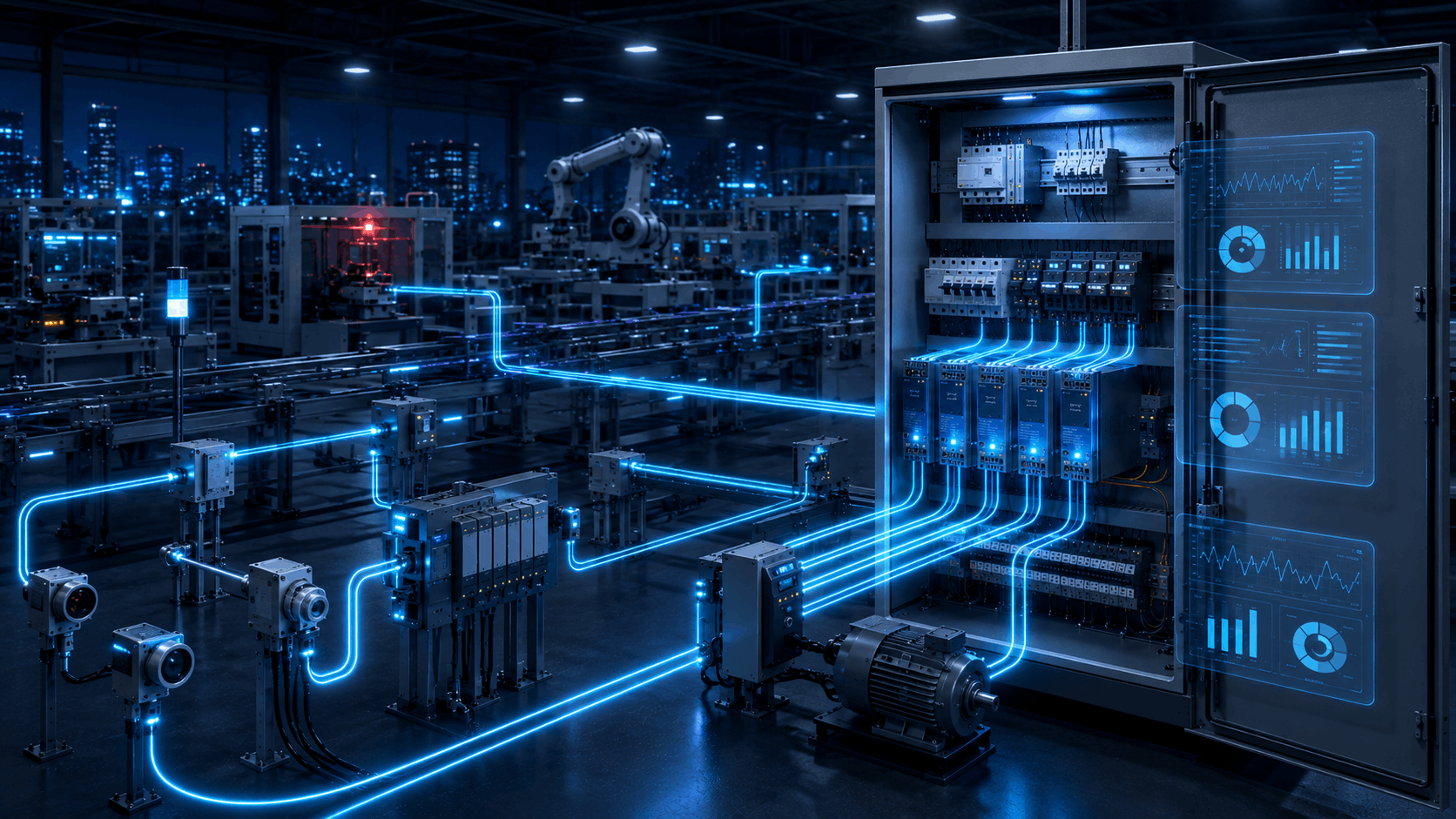
As manufacturing systems become increasingly connected, attention often focuses on sensors, data, and communication layers. However, one of the most critical foundations of industrial efficiency is often overlooked: power infrastructure.
Even the most advanced automation system cannot operate efficiently without stable, reliable power. As production environments become more connected and data-driven, power quality and protection play a direct role in uptime, equipment reliability, and overall operational performance.
Smart power infrastructure is therefore becoming a key part of connected industrial systems, working alongside technologies like IO-Link to support more resilient and efficient operations.
The Role of Power in Connected Systems
In modern automation environments, power is no longer just about supplying energy to machines. It is about ensuring stability for increasingly sensitive and connected equipment.
As systems become more data-rich and interconnected, even minor power disturbances can have wider operational impacts. This makes power quality and resilience a key factor in maintaining efficiency.
Smart infrastructure solutions help ensure that connected systems remain stable, reliable, and protected.
Preventing Downtime Through Power Reliability
Downtime is often associated with mechanical failure or sensor faults, but electrical instability is a common and sometimes overlooked cause.
Voltage fluctuations, transient surges, or unstable power supply conditions can all lead to unexpected shutdowns or equipment malfunction.
Power solutions such as the Phoenix Contact TRIO Power supply range are designed to provide stable and efficient energy delivery to industrial systems, helping to reduce the risk of disruption caused by inconsistent power conditions.
By maintaining stable machine operation, manufacturers can reduce unplanned stoppages and improve overall system availability.
Protecting Connected Equipment
As more devices become connected through technologies like IO-Link, the importance of protecting those devices increases.
Sensitive electronics, communication modules, and control systems rely on stable electrical conditions to operate effectively. Without adequate protection, transient voltage spikes can damage equipment or reduce system reliability over time.
Phoenix Contact surge protection solutions help safeguard connected infrastructure by protecting systems from electrical disturbances before they can cause damage.
This protection layer is essential in maintaining the long-term reliability of both legacy equipment and modern connected devices.
Monitoring Power Health for Greater Visibility
Just as IO-Link improves visibility at the device level, smart power infrastructure contributes to visibility at the electrical level.
Monitoring power health allows engineers to understand how electrical conditions are impacting system performance. This can help identify:
- Instability in power supply
- Early signs of component stress
- Potential sources of downtime
- Inefficiencies in energy usage
When combined with connected automation systems, power monitoring becomes part of a broader visibility strategy that supports more informed operational decisions.
When power conditions fluctuate, machines may behave inconsistently, leading to:
- Unexpected resets
- Communication faults
- Reduced equipment lifespan
- Process interruptions
By ensuring consistent and protected power delivery, smart infrastructure helps maintain smooth and predictable machine operation.
This stability is essential in connected environments, where devices and systems rely on continuous communication and coordination.
Building the Foundation for Connected Efficiency
As manufacturers continue to adopt connected technologies, the importance of infrastructure becomes even more apparent.
IO-Link and smart sensing provide visibility at the device level, but without reliable power infrastructure, that visibility cannot be fully leveraged.
Solutions such as Phoenix Contact TRIO Power supplies and surge protection systems form part of the essential foundation for connected efficiency, ensuring that data, devices, and systems remain operational, stable, and protected.
In this way, smart power infrastructure is not separate from connected manufacturing, it is what enables it.
Understanding where you stand and what steps to take next can be challenging, but you don’t have to navigate it alone, get in touch today.